
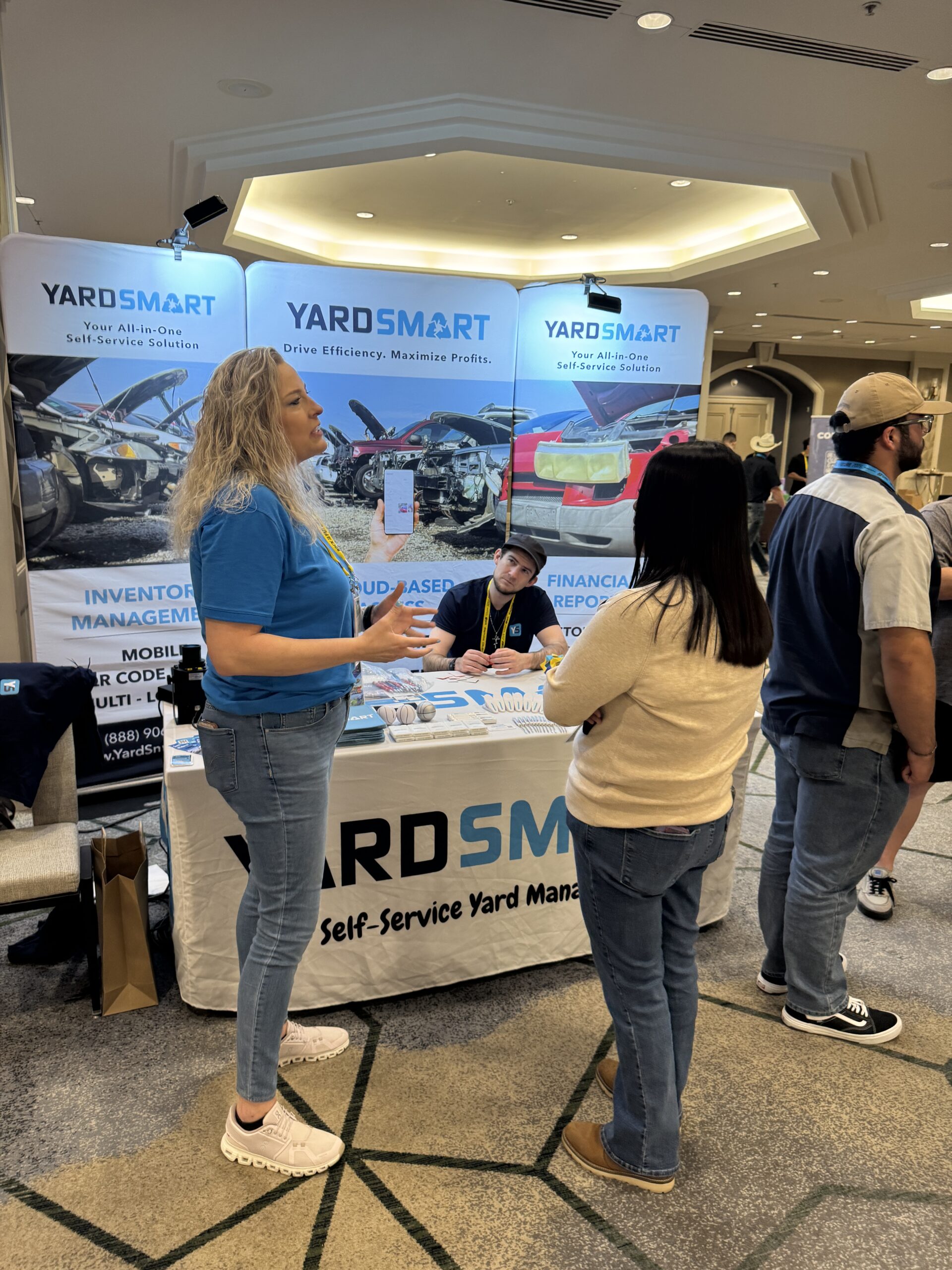

We Were There: YardSmart at URG 2026
A recap from Denver: The conversations, the sessions, the giveaway winner, and what comes next.
Denver delivered. URG 2026 wrapped up May 7–9 at the Sheraton Downtown, and if the energy on the floor was any indication, this industry is anything but standing still.
We were there as a Silver Sponsor at Booth #24…AND we came ready. Here's what we saw, what we heard, and why it matters for “The future” of self-serve operators heading into the second half of the year.
First Things First: We Have a Nintendo Switch Winner
Before anything else - a big congratulations to Gaby Rodriguez of Prestige Auto Parts for winning the Nintendo Switch giveaway.
Every entry required booking a demo. That was intentional. We wanted conversations with operators who were genuinely curious - not just grabbing swag. The response exceeded expectations, and the conversations that came out of it confirmed what we already believed: the self-serve segment is ready for a better operating system.
If you booked a demo and haven't heard from us yet, you will shortly.
The Room Read: What URG 2026 Told Us About Where This Industry Is Heading
Three days. Dozens of sessions. A vendor floor packed with operators from across the country.
Here's what stood out.
1. The data conversation is getting serious.
Two sessions caught our attention immediately: "What Gets Measured Gets Managed" led by Eric Larkin of Nevada Pic-A-Part, and "Mastering Your Metrics: How to Read the Story Your Numbers Are Telling" with Eben Shantz, Whit Lowell, and Aaron Arnold.
Both were targeted specifically at self-serve operators. The message was consistent: yards that run on gut instinct are getting lapped by yards that run on numbers. Customer velocity, inventory freshness, yield per unit - these aren't accounting metrics anymore. They're operational levers.
That's exactly the philosophy YardSmart is built on. And it was validating to hear it echoed from the main stage.
2. Cybersecurity isn't a back-office concern anymore.
Multiple sessions addressed it directly: "Data Driven Security for Yards" with Bryan Thornton of Net Reaction, "AI Efficiency & Cybersecurity: Tools You Can Use Now" with Gex Williams of UpNow IT, and "AI & Data: What Aren't They Telling You" - the latter presented by Glenn Wear of AAA Auto Parts, one of the more technically sophisticated operators in the room.
The pattern is clear: server-based infrastructure is a liability, not just an inconvenience. Ransomware attacks have hit yards in this industry. Backdoor vulnerabilities have been documented. The question operators are starting to ask isn't "should we go cloud?" - it's "why haven't we already?"
YardSmart has been cloud-based for four years. No servers to maintain. No VPNs to wrestle with. No single point of failure sitting in a back room. That's not a feature we added - it was a founding decision.
3. Revenue per vehicle is the self-serve KPI that matters most.
"Maximizing Revenue Per Vehicle" with Jason Howell of All Import drew a self-serve crowd for good reason. Total yield per unit - parts plus scrap - is the metric that separates yards running lean from yards leaving money on the table.
In Part 1 of this series, we shared the numbers from Chesterfield Auto Parts: $485+ in parts revenue per car, $750+ in scrap lift. That's $1,235+ in total yield per unit - driven by fast intake, real-time visibility, and demand-aligned buying.
That number doesn't happen by accident. It happens when the system is built for it.
4. The self-serve segment has a seat at the table - and it's growing.
The dedicated Self-Service Panel on Friday afternoon - with Lance Thomas of BYOT, Eric Wilbert of Wilbert's, and Adam Hawkins of Nevada Pic-A-Part - reinforced something we've been saying for a while: self-serve isn't a niche anymore. It's a distinct operating model with its own economics, its own workflow needs, and its own software requirements.
Generic yard management systems weren't built for this. That's not an opinion. It's a product architecture reality.
What We Heard on the Floor
The booth conversations told a story too.
Most self-serve operators at URG are currently on a legacy platform. The majority of them have heard promises about an updated version. Many are waiting to see if those promises materialize.
A few things were consistent across those conversations:
- Nobody loves their current setup. The frustrations were real - server crashes, photo chaos, limited flexibility, slow support response times.
- The hesitation isn't about YardSmart. It's about the friction of switching. Time. Staff retraining. Data migration. The fear that it's going to hurt before it gets better.
- The operators who've been through it say the opposite. Joey Ballew of RTP: "Other than the photos, setup was easy." Scott Buckelew of Pick UR Part: "We would not have had our success in our first month if it wouldn't have been for YardSmart."
The gap between perception and reality on switching is exactly what Part 3 of this series is going to address head-on.
A Note on Where This Industry Is Going
URG CEO Kristi Werner's "The Road Ahead" session with the Board of Directors closed out the main programming on Friday. The message was clear: the next era of auto recycling belongs to operators who are data-driven, cloud-enabled, and willing to move.
We agree. And we think the self-serve segment, the yards built on throughput, total yield, and cars-in-cars-out efficiency IS positioned to lead that shift.
The tools are here. The data is available. The only question is whether your operating system is built to take advantage of it.
Coming Up: Part 3
Part 3 of YardSmart Is the Future is the one operators on the fence have been waiting for.
The actual switch story. A real migration timeline. What your team handles, what we handle, and what the first 30 days look like. Plus more from the operators who've been through it - in their own words.
If you're already thinking about making a move and don't want to wait, start here:
→Request the Migration Plan + Timeline
A step-by-step plan you can review on your own, before you ever get on a call.
Missed Us at URG? The Demo Is the Next Step.
Whether you stopped by Booth #24, heard about us from another operator, or found this post on your own - the demo is where the real conversation starts.
No pressure. No hard sell. Just a look at what a self-serve yard operating system is supposed to feel like.
YardSmart is built exclusively for self-serve U-Pull-It and hybrid self-serve yards. Not full-service. Not parts inventory management. If that's your operation - let's talk.
Continue reading the series:
- Part 1 - Switch Happens, and the Numbers Prove It: read here
- Part 2 - Two Schools of Thought, and Why the Numbers Pick a Side: read here
Hear from operators who made the move:
- Scott Buckelew, Pick UR Part (Lubbock, TX): read the story
- Joey Ballew, RTP: read the story
Jonathan Morrow, M&M Auto: read the story
FAQ
Q: What is the difference between parts-first and scrap-first yard operations? A: Parts-first yards price vehicles based on projected parts revenue and rely on a buying tool to protect margin. Scrap-first yards - also called cars-in, cars-out operations - treat scrap as the floor and parts revenue as upside, focusing on total yield per unit and throughput speed. Self-serve U-Pull-It yards typically run more profitably on a scrap-first model.
Q: What is total yield per vehicle for a self-serve yard? A: Total yield per vehicle combines parts revenue and scrap lift per car. At Chesterfield Auto Parts, running YardSmart, that number exceeds $1,235 per unit - $485+ in parts revenue and $750+ in scrap lift.
Q: What yard management software is built specifically for U-Pull-It yards? A: YardSmart is built exclusively for self-serve U-Pull-It, You Pull It, and hybrid self-serve yards. It is not a full-service parts inventory management system.
Q: Why does inventory freshness matter in a self-serve yard? A: Fresh inventory drives online search visibility, which drives foot traffic, which drives pull-through and turns. Yards running real-time intake-to-visibility workflow - where cars appear online immediately after intake - consistently outperform yards where inventory updates lag by hours or days.