
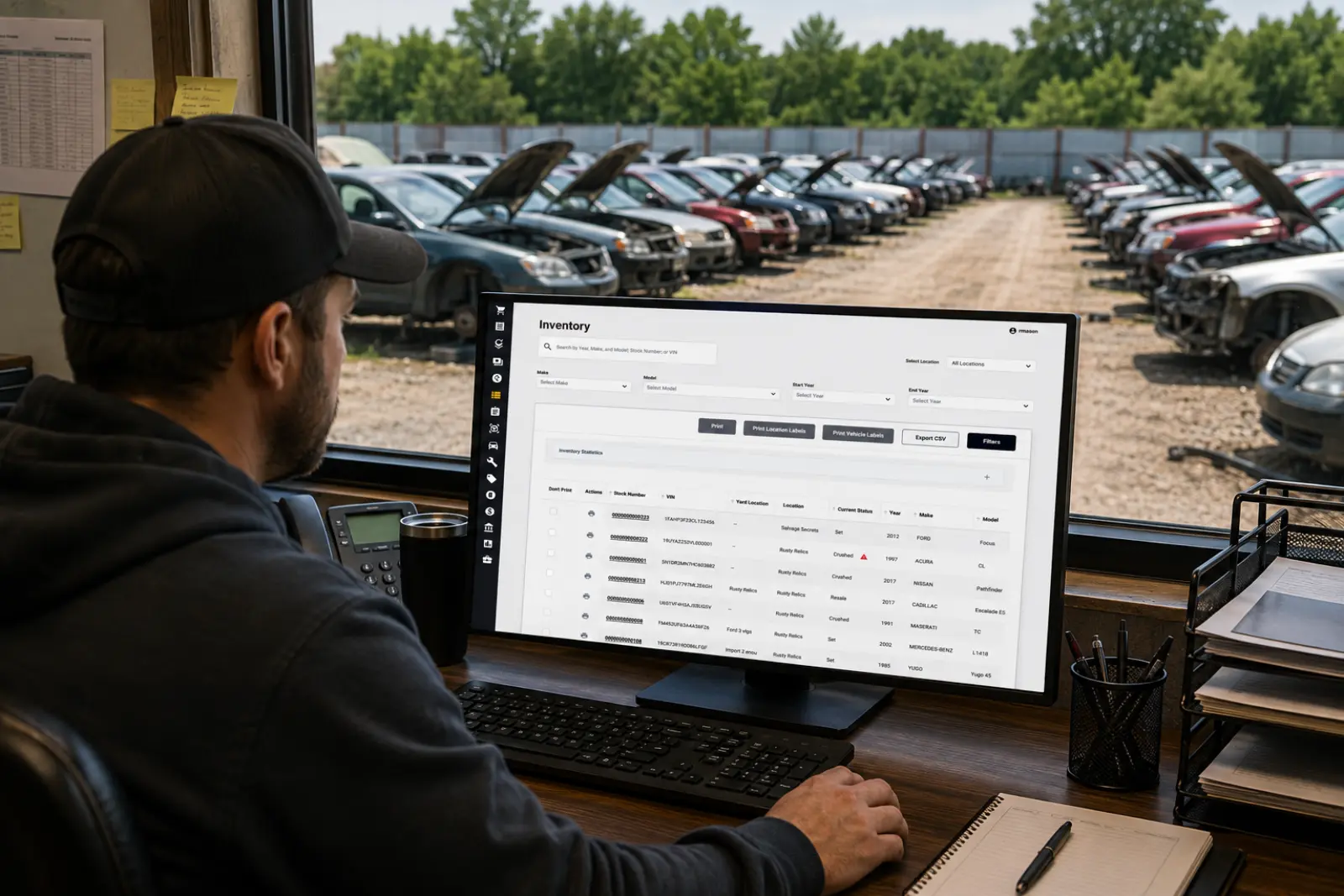

Your yard runs harder than it should. Intake takes too long, pricing depends on whoever happens to be at the counter, and month-end reporting eats a full day. Maybe you’ve even found the fix: self-service yard software built for how a U-Pull-It operation actually works.
The hard part isn’t spotting the problem. It is getting the person who signs the checks to agree the problem is worth solving now.
Lead With the Problem, Not the Software
The fastest way to lose an owner is to open with a feature list. Features are your answer to a question they have not agreed to ask yet. So start with the question.
Point to the friction they already feel. The vehicle that sat in the yard for two weeks before it got logged. The customer who got quoted two different prices on the same part. The afternoon someone burned rebuilding a compliance report by hand. You aren’t selling a platform in this moment. You’re naming pain the owner recognizes, then showing that the pain can and should be removed.
Once leadership agrees the current setup is costing something real, the conversation shifts from "why change" to "what changes."
Put Real Numbers Behind the Pitch
Owners think in dollars and hours. A pitch that stays vague ("it'll make us more efficient") invites a shrug. A pitch built on numbers invites a decision. Work both sides of the ledger.
Add Up the Cost of the Status Quo
Before you can show what new software returns, show what the old way takes. Estimate the ongoing drag:
- Time lost to manual work. Add up hours spent on intake, pricing edits, receipt lookups, and hand-built reports every week, then multiply by a wage. The number is usually bigger than anyone guesses.
- Pricing inconsistency. Prices that drift by employee or by day quietly leak margin. It is hard to measure exactly, but leadership knows it happens.
- Compliance exposure. A missed or sloppy VIN report isn’t just wasted time. It’s risk.
Show Where the Money Comes Back
Now show the return. Faster, standardized intake frees labor. Bulk pricing tools kill the per-part guesswork. And live web inventory through YardConnect Pro puts your stock in front of buyers before they drive over.
When you frame software for self-service salvage yards as a margin tool rather than an expense, the math starts persuading for you.
Prepare for the Pushback
Assume every objection you can think of will surface, and have a short, honest answer ready for each. Guessing wrong here is how good pitches stall.
- "It costs too much." Set the subscription against the status quo number you already calculated. Cost is a comparison, not an absolute.
- "Migrating will be a nightmare." Name the plan. Modern U-Pull-It management software is built to move you over without shutting the yard down, and a defined migration path takes the fear out of the unknown.
- "We've always done it this way." Agree that the old way built the business, then point out that the yard has outgrown the tools that got it here. Respect the history; question the ceiling.
- "The crew won't learn it." Software designed for yards, by people who run yards, is built to be picked up fast. Offer to run a short trial so the team can judge for itself.
Bring proof, not just answers. A comparison of what the yard uses today against what it could use makes the gaps concrete.
Lower the Perceived Risk of Switching
For most owners, the real hesitation is not the price tag. It is the fear that switching will break something during business hours. Address that head-on.
Cloud-based systems remove the biggest old objection: There’s no expensive on-premises server to buy, house, or maintain. Setup is light and the barrier to starting is low.
Just as important is what happens after you go live. When something comes up, you want to reach a person who understands a yard, not a generic ticket queue. That kind of responsive support is a genuine differentiator, and it is worth saying out loud.
Peer proof helps too. Other self-serve operators have already made the move and kept running. An all-in-one U-Pull-It software platform that consolidates intake, pricing, scrap sales, and compliance reporting into one place is far less risky than the pile of disconnected tools it replaces. Point to yards that switched and stuck. Nothing quiets a skeptic like a neighbor who did it first.
Pick Your Moment
Timing turns a good case into an easy yes. The same pitch lands differently depending on when you make it. Look for a natural opening: budget planning season, the year-end window when a purchase can offset the tax bill, the week the current system fails again, or the moment a competitor stumbles and the yard needs an edge. When the ask lines up with something leadership is already thinking about, it feels timely instead of disruptive.
The Bottom Line
The strongest case for new software is not the flashiest demo. It is the one built on the yard's own numbers, aimed at problems the owner already feels, delivered when the timing is right. Do that homework, and you are not asking leadership to take a leap. You are handing them a decision that mostly makes itself.
Check out YardSmart’s features to help you make your case.